What does a revolution sound like?
"Sound of History" is a What Now: 2026 project spearheaded by a stupendous group of collaborators at the intersection of music, memory, and museums.
What does a revolution sound like?
Sorry...let's be more specific: What did The Revolution sound like?
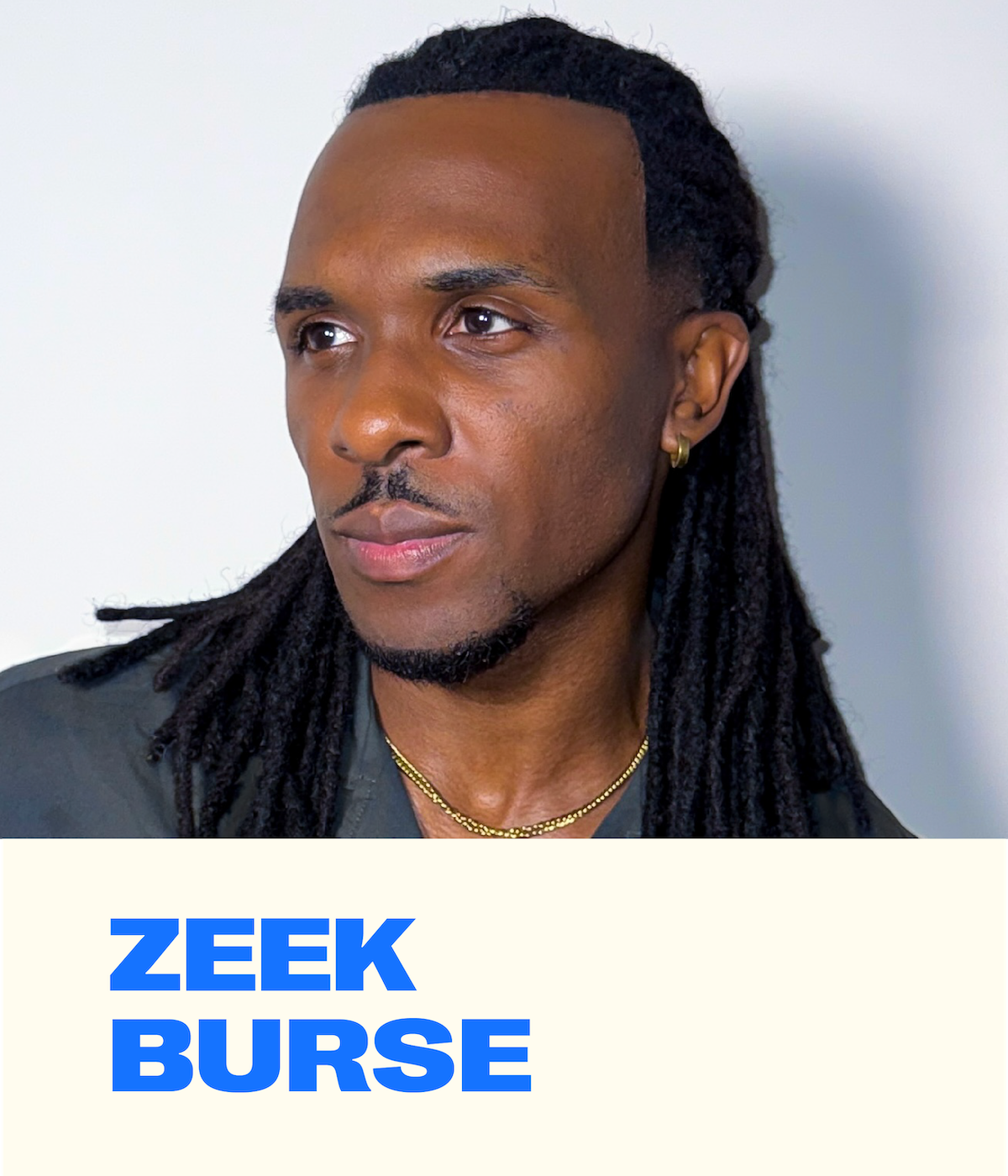
That is a question being asked by Sound of History, a What Now: 2026 project spearheaded by a stupendous group of collaborators at the intersection of music, memory, and museums. ArtPhilly, WXPN, WRTI, Black Music City, REC Philly, and the Museum of the American Revolution are working together to create an auditory reflection on 250 years of the nation. And it’s up to two local musicians — Laurin Talese and Zeek Burse — to answer the call.
“Our earliest conversations were in our founders board room,” recalls Adrienne Whaley, Director of Education and Community Engagement at the Museum of the American Revolution. “Representatives from ArtPhilly, the museum, WRTI and WXPN sitting around, imagining what it would look like if you embedded musicians at the museum.”
“One of the things that my team tries to do is really think about how we can help to immerse people in the past in a way that makes it less of a foreign country,” she continues. “How can we convince the public today that the people that we talk about when we're talking about the American Revolution were real people — moving through the world with hopes and dreams and struggles and excitement? They were getting dressed, dealing with politics, but also working, walking the streets, and hearing the sounds of life.”

Adrienne Whaley | Director of Education & Community Engagement at the Museum of the American Revolution
That inspiration — to draw the past and the present closer together — was repeated over and over again by the project’s collaborators.
“Although people who lived in the past could be very different from us, there's this false distinction between the past and the present,” says Bill Adair, Creative and Executive Director of ArtPhilly. “There is this great quote by Faulkner, ‘The past is never dead. It's not even past.’ We package history in one area and the present in another area. And that's an irrational distinction in my mind — and not a very useful one.”
Sound, and music more specifically, will be that tether. Talese and Burse are in residence two days a week at the museum through the winter months. They will also attend special events at the museum to learn about how the institution interacts with the public. Most importantly, the musicians will work with the curatorial and collections team — which is actually run by a musician who plays the fife — to gain access to documents and artifacts from the revolutionary era. That immersion will ground them as they figure out how to interpret the project’s big question. This all relates to a challenge Whaley and her team at the museum contend with — you can display a musket, hang a painting, or transcribe a letter, but aural remnants from Colonial America don’t exist. Spotlighting the soundscape of 1776 requires research and imagination.
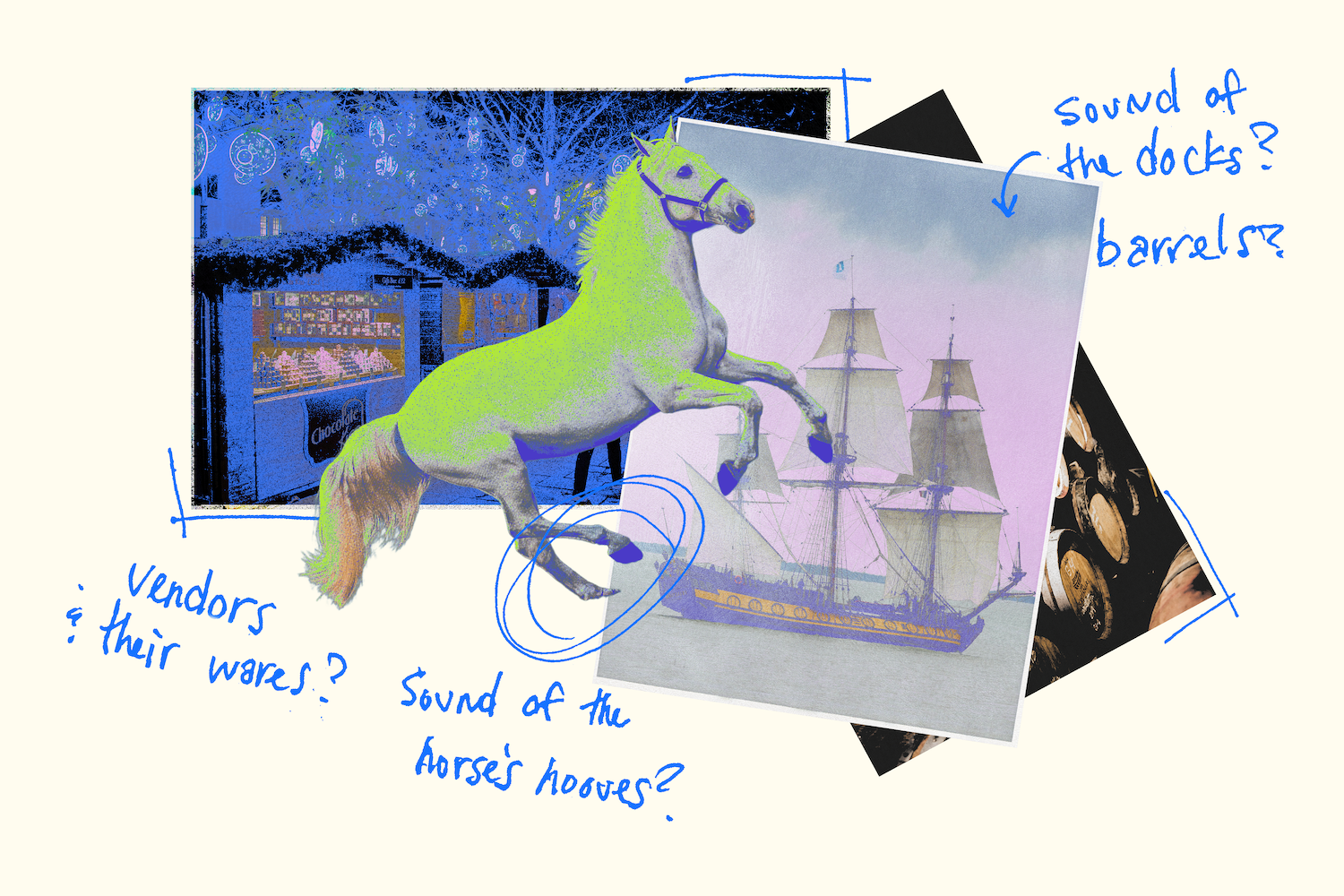
“What is the sound of the horse's hooves as they go down the cobblestones?” asks Whaley. “What is the sound of the vendors at the market advertising their wares? What is the sound at the docks as the ships are coming in, and crates and barrels are being unloaded? What are the conversations that are spilling out of the taverns and coffee houses and private homes? What are the songs that people are singing?”
All that said, the artists have wide latitude to interpret the prompt, and the final products are up to them. Talese is thrilled by that autonomy — and called it a credit to ArtPhilly and the other partners.
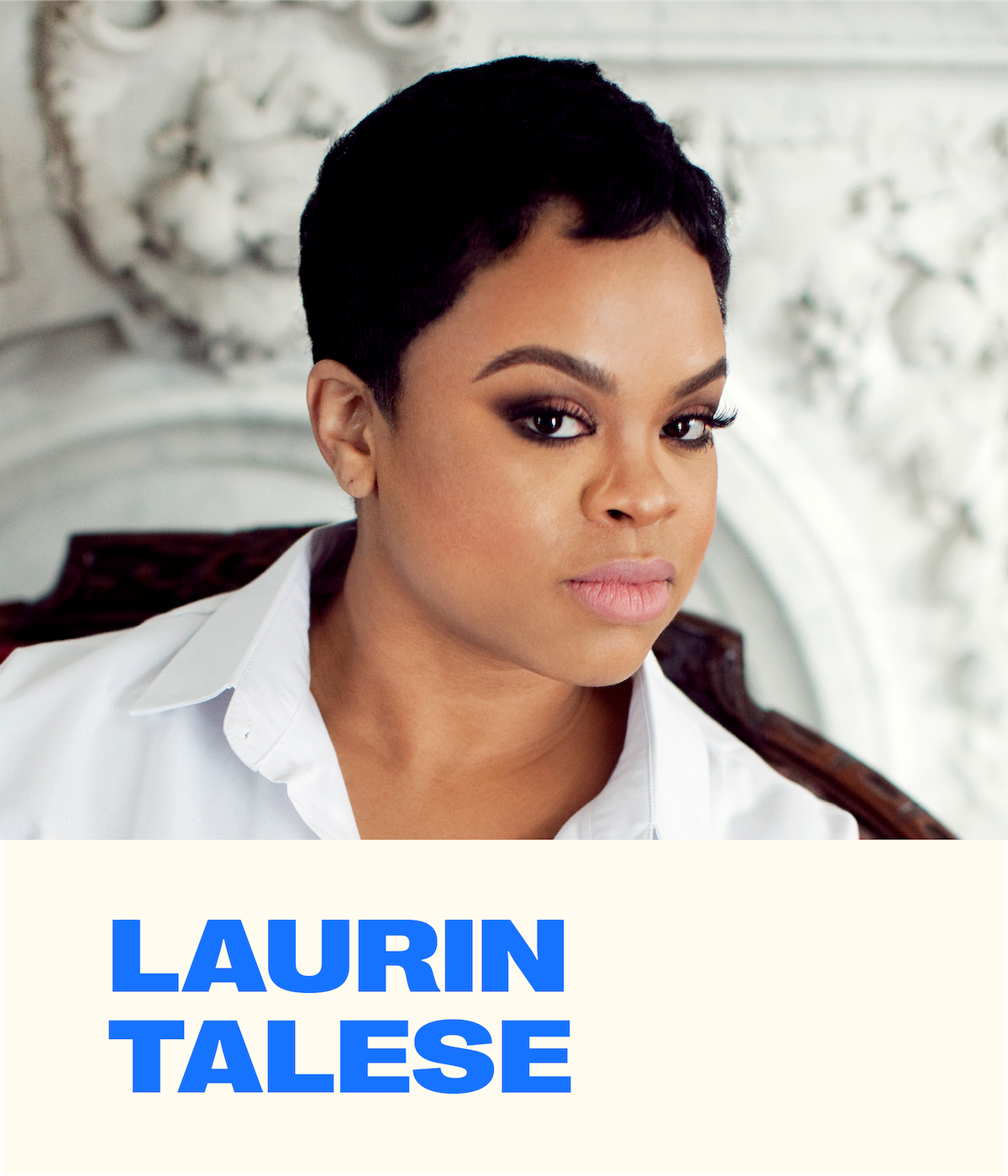
“I love the fact that there are no bounds on creativity, on vision,” says Talese. “They sought out folks who know themselves, and they are empowering us to communicate what we know about ourselves to the world.”
“When an artist gets the opportunity to just truly create something, it's very liberating,” adds Burse. “We feel not only seen on the surface level, but our artistry is trusted to deliver.”
The duo bring their own individual perspectives. A composer, educator and singer, Talese is focusing on the lives of ordinary people during the Revolutionary era. Burse’s project is highlighting six primary source documents written during that time.
“But I'm telling those stories in a modern way,” he says. “I don't want my project to be just a melodic version of history. I want it to be something where people can actually see themselves in it. I like to take people on a sonic journey, to be honest, and put them in a whole new space to feel something new.”
For ArtPhilly, this project helps realize a particular part of its vision, one near and dear to Adair’s heart. He is a museum guy, through and through.
“For the last 25 years, I’ve been introducing contemporary artists to historical collections and asking them to interpret those collections in ways that they found meaningful, interesting and useful,” he explains. “Not only did it affect the artist's work — which it really did — but it also affected how museums think about themselves. It seemed like this would be a good idea to have that as part of the festival. We have all these historical museums in Philly. We have all these amazing artists. Let's create some mashups!”
With the festival pinned to the 250th birthday of the nation, the Museum of the American Revolution was an obvious choice. Starting with initial conversations two-and-a-half years ago, the leadership were instantly receptive. When it came to finding the artists, ArtPhilly looked to Black Music City and its stakeholders, REC Philly, a local marketing agency; WXPN, a public radio station out of University of Pennsylvania; and WRTI, a jazz and classical station under the umbrella of Temple University. That program began as a one-off during the pandemic, but was extended thanks to its success.
“Roger LaMay [from WXPN] and I were having a conversation and realized that there were a lot of artists who were suffering,” says WRTI’s Bill Johnson of that tumultuous time in 2020. “As music stations, we asked ourselves, what can we do?”
Black Music City supports artists directly via grants, while also amplifying Philadelphia's rich Black music heritage. It is a deeply collaborative project that brings different local institutions together. Sound familiar?
“When I first heard about Sound of History, it sparked my imagination,” recalls Johnson. “It felt to me like an artist who is creative could take any aspect of what happened 250 years ago, and make it contemporary and relevant."

Bill Johnson | General Manager of WRTI
On this project, WRTI has served as a partner, cheerleader, and sounding board. Plus, they know a little bit about the long arc of history.
“To me, it's fun to be a classical station for the 250th because this is music that's been around for that long and then some,” says Johnson. “We’ve got the sounds of 250 years ago on the radio today. I'm really excited to have people engage with 250 years of history. I think it's an opportunity to bring things to the fore that sometimes we might sweep under the rug or at least push aside because they may be uncomfortable or inconvenient to think about.”
Meanwhile, WXPN was already thinking about ways to “be engaged with the semiquincentennial,” recalls LaMay, the station’s general manager. “That’s a word that the rest of the country is not familiar with — and here it just rolls off everybody's tongue!”
When WXPN was approached by ArtPhilly, the elements started to fit together. Sound of History was an exciting expression of the station’s mission: to connect artists and audiences, with a particular emphasis on local artists. Plus, the station’s preexisting relationship with Black Music City felt like another piece of the puzzle.
“We were very involved in the artist selection process,” recalls LaMay. “We’re going to be very involved at the end of the project when we get into putting on the shows — and we're looking to intersect with both the museum and the artist during the course of the project, not only to see how it's coming, but to build anticipation and illuminate the process.”

Roger Lamay | General Manager of WXPN
In some ways, Sound of History exemplifies the What Now: 2026 mission: interpret 250 years of America through the lens of contemporary Philadelphia artists. The projects will premiere at the museum as part of the museum’s Juneteenth celebrations, and then have a second showcase at another local venue. The radio partners — WXPN and WRTI — will also be sharing this work over the airwaves.
The musicians tasked with this prompt understand its potential. When reading the brief, Burse felt “invigorated and excited.” He had already been thinking about the 250th.
“This is a very poignant opportunity to use art in a way that can highlight the past, the present and potentially the future of this experiment that we call America,” he says. “One of my favorite quotes is from Nina Simone: ‘An artist's duty, as far as I'm concerned, is to reflect the times.’ That is something that I hold very dear to me. They say history repeats itself. I think some things we have to repeat to truly learn the lessons.”
Two and a half years ago, the partners on this project couldn’t have foreseen just how relevant Sound of History — and the questions it asks about life during an era of political turmoil — would feel in this particular moment.
Whaley puts it another way. “One of the things that our institution talks about a lot is the fact that we don't think that people need to think about the Revolution as something that ended with the end of the war,” she says. “We talk about the revolution as something that is ongoing.”
For more on Sound of History, visit the project page.
For more articles like this, subscribe to the newsletter in the footer below!