"What's Your Jawn?"
An arts-centric youth voting initiative brings its creative energy to What Now: 2026.
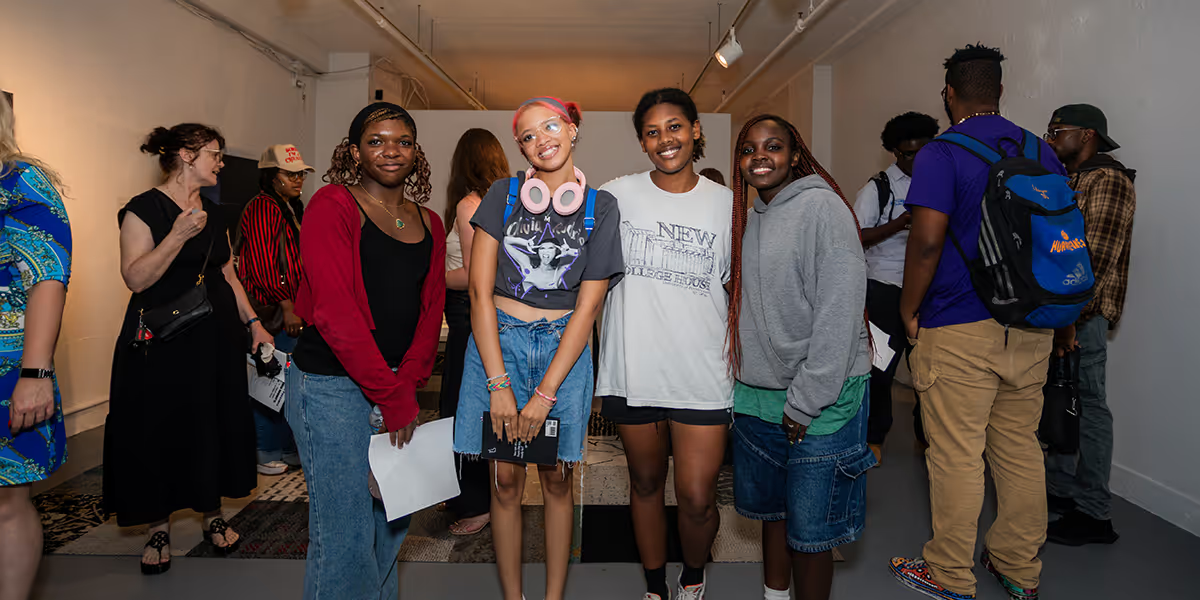
It’s a simple question. An expansive question. A very Philly question. A question being asked by #VoteThatJawn, an arts-centric youth voting initiative that will be showcased as part of What Now: 2026.
“What we mean by that is, what gets you to the polls?” explains Carson Eckhard, who joined #VoteThatJawn as a college student; the Stanford Law student’s current title is youth director. “That jawn — it really could be anything. It could be an issue. It could be your relationships with your family and friends and your neighborhood. Whether it's gun control or trash collection or even just wanting to have closed streets on the weekends, those are all voteable issues. Voting is the way to the kind of future you want.”
Seven years ago, she was teaching a class At University Of Pennsylvania called "Safe Kid Stories."
“We did this before COVID — before the word ‘safe’ was everywhere,” she recalls. “And the idea was, what really keeps young people safe emotionally, psychically, spiritually? The students would talk about it and think about it and write about it.”
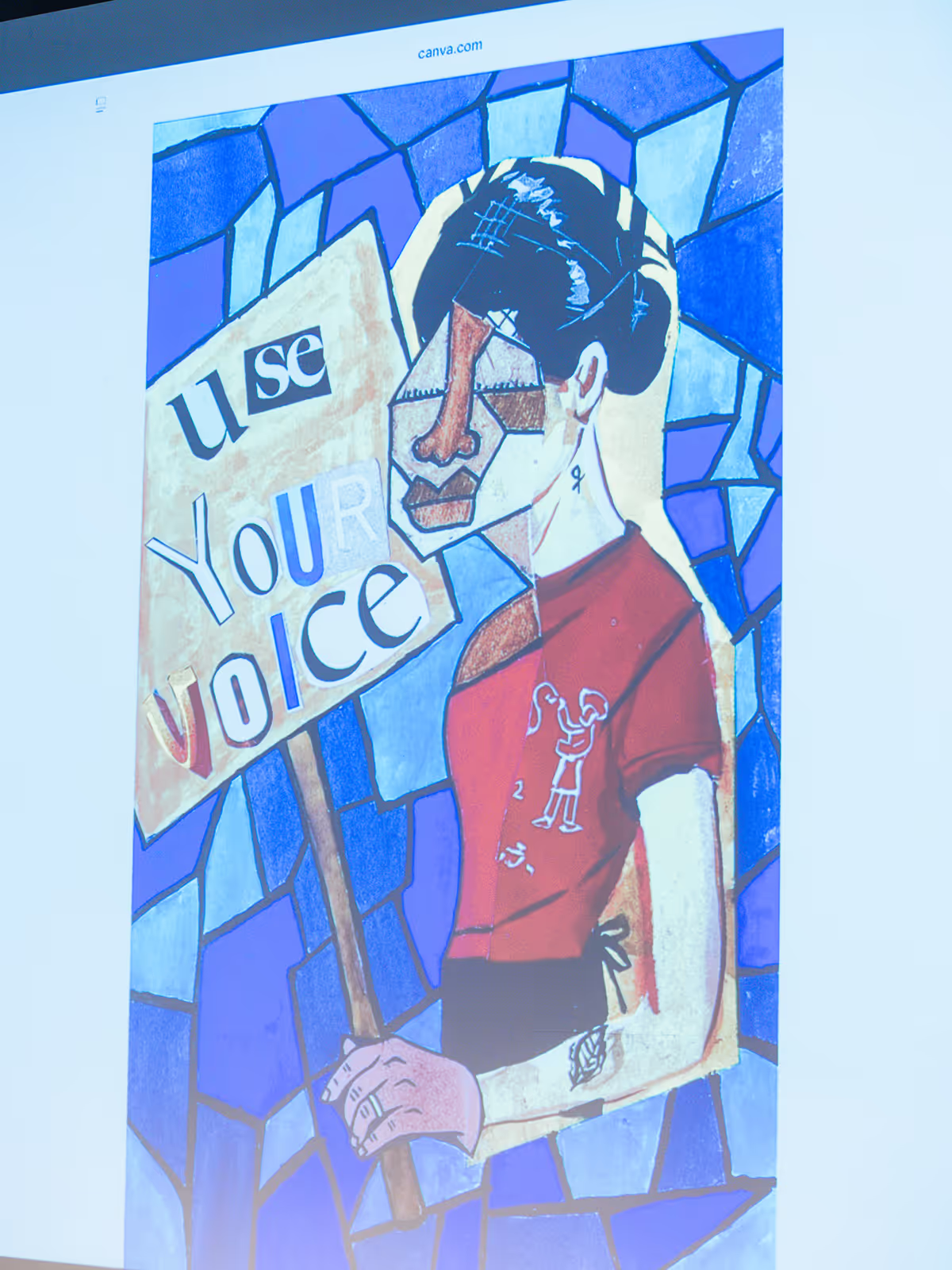
The non-fiction writing class included both memoir and interviews. After the Parkland High School shooting in 2018, Cary’s students wanted to create work for the March for Our Lives, including printed take-away pieces for attendees.
“After that march, all of them decided that the thing that would keep young people safest would be if other young people would vote,” she says. “So my students — my bossy students, who would all be gone next year — said to me, ‘You need to make this course about youth voting.’”
Cary spent the summer workshopping the idea with students, alumni, and colleagues. The original name they came up with sounded, in her words, “very corporate and important.” But when she was tasked with writing a blurb for the project she’d, “been unable to remember the damn thing.”
So the conversation continued. At some point, someone quipped,
"Well, what do we say? like, ‘What’s your jawn? You should vote it.’"
“Yes, that’s what we call it. We all laughed. When was the last time you laughed about voting?”
In the ensuing years, #VoteThatJawn has evolved and grown. As part of its curriculum, whether via a class at Penn, an internship, or a summer program, young people encounter themes and prompts, and respond with what Cary calls their “superpower for communication” — drawing, fine arts, design, nonfiction writing, video or music.
Two students collaborated on the organization’s first rap song, which included the line, “If you would promote that jawn, then vote that jawn.” Student Samira Mehta embraced the program’s creative freedom, penning an essay about climate change and water scarcity in rural Mexico and compiling images of puppies and photoshopping onto them phrases like “my issue is LGBTQ rights” or “my owner wants you to vote.” That blend of the serious and the whimsical, the creative and the practical has been incredibly successful at engaging young people. It’s also deeply Philadelphia.
Despite its relationship to our fraught political system, the program is explicitly non-partisan — and that is important to Cary.
“We turned down money from organizations that said they were interested in youth vote, but really just wanted kids to vote for their party,” she says. “It gets a lot easier if we think about this as a rite of passage toward adulthood. At 18, they can still talk and they can still understand. Their values are still growing and they are able to think about their entire generation and their community.”
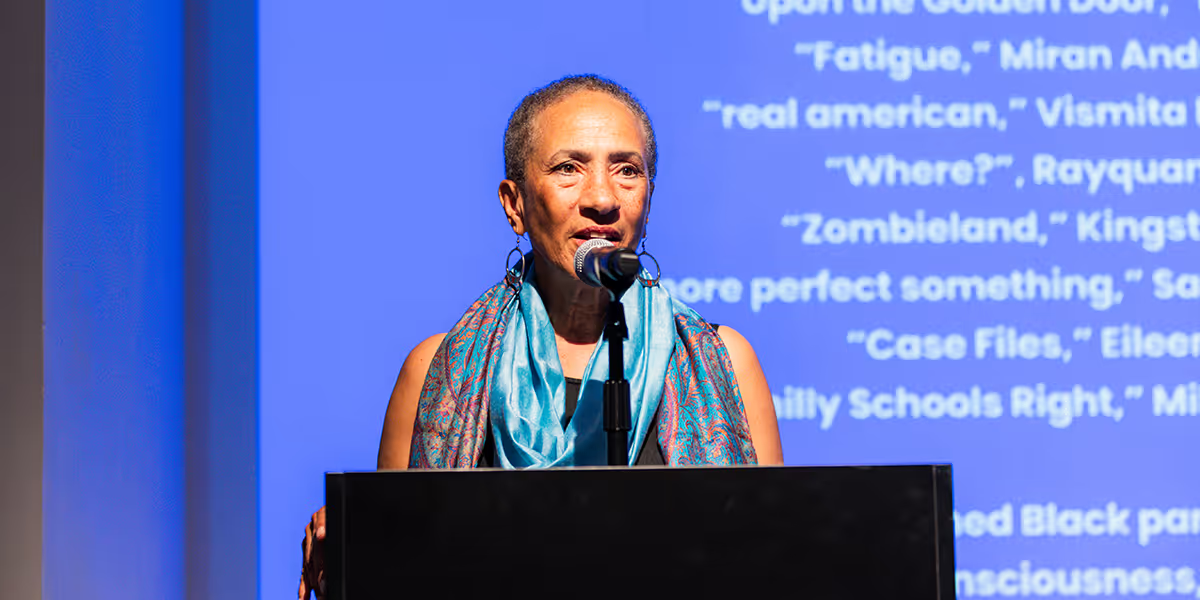
As #VoteThatJawn has evolved, there have been many memorable moments — like when Rebecca Sinkler, former editor of the New York Times Book Review, joined Zoom calls to comment on the work and hype up the students, or when the aforementioned rap was performed at WHYY, or when political cartoonist Signe Wilkinson, one of the many retirees who lend their time and passion to #VoteThatJawn, came to an event and created drawings on the spot.
“We all should get together and decide things to govern ourselves,” she continues, “and do it with the stuff that makes us most human and the stuff that's most beautiful and interesting, which is our artwork.”
Summer Jawn, which recently celebrated its 2025 session with a public performance, is an expansion of #VoteThatJawn beyond the university classroom. A cohort of part-time participants produced work over the course of six-and-a-half weeks. They met for class. They took field trips. Guest speakers opined on art or civic engagement. They gathered at the Free Library to collaborate. They attended office hours. And then they worked on their own
“And always the idea is, how do we produce excellence?” says Cary. “When it's posted online, we want students to claim it. They can be proud of it. They can put it on their college applications. They can take it with them when they apply for jobs.”
So after seven years and several election cycles, how does #votethatjawn define success?
“If the students who work with us do fine work — if their work is better than when they came in — then we feel that's a measure,” says Cary. “If you're working with young people and they don't learn something, what's the point?”
“This summer, we had an open mic to cap off our summer internship,” recalls Eckard. “And high school students, who have been slowly coming out of their shells all summer, took the mic and recited a poem that they wrote only a few weeks ago. It was their first ever time sharing their work like that. To me, that moment is success.”
The project also tracks social media engagement across several platforms, and looks at data on how many people in Philadelphia between the ages of 18 and 24 are both registering to vote and then actually voting. #VoteThatJawn can’t take responsibility for all those numbers — there are other organizations, including partners, also tackling this stubborn problem — but it’s one way that they validate their project.
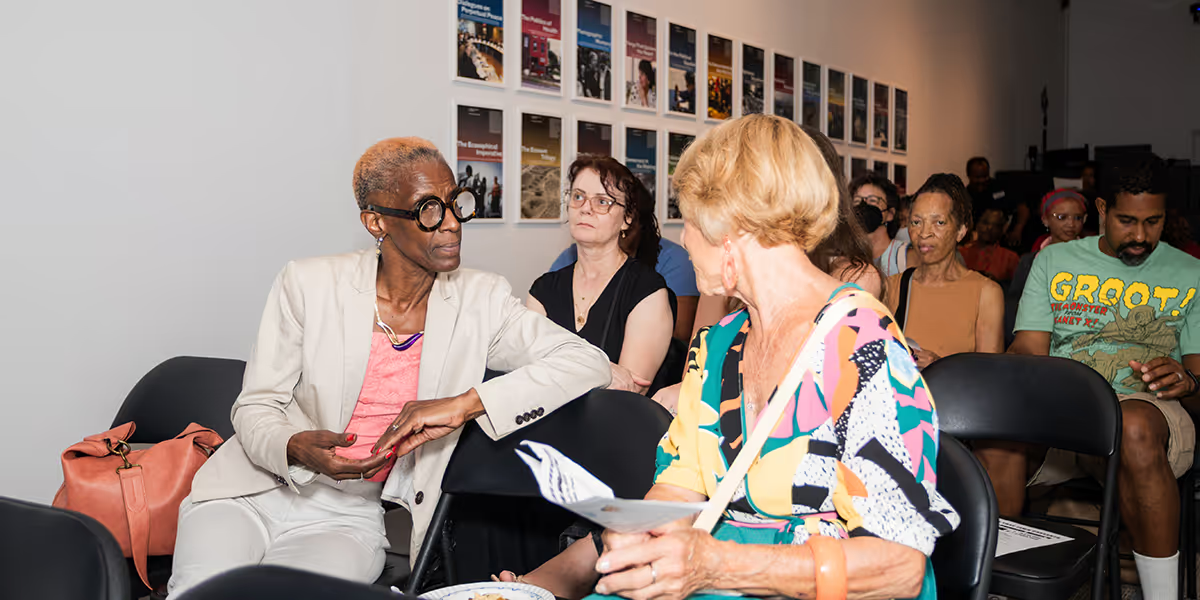
“Lorene often says that the goal with #VoteThatJawn is that this is a first foray into a lifetime of civic engagement,” says Eckhard. “We're hoping that by encouraging students to use their creativity, it becomes a deeply rooted commitment that's more than just a casual conversation or a one-minute stop at your local polling place.”
“I think historically, arts and voting — it's not necessarily the most obvious connection to students,” she continues. “But we’ve found that once people are working with us, they see that art is an incredibly powerful tool in amplifying young people's voices. It’s an outlet, especially during a time when it feels either hard to speak up or people don't know what to say. Writing a blog post or creating a video or a cartoon not only allows them to share their thoughts and feelings, but also to share that with their community.”
Images courtesy of Vote That Jawn.