From The Sisterhood to "The Becoming"
Shavon Norris and her collaborators will debut a new multi-media project at Painted Bride
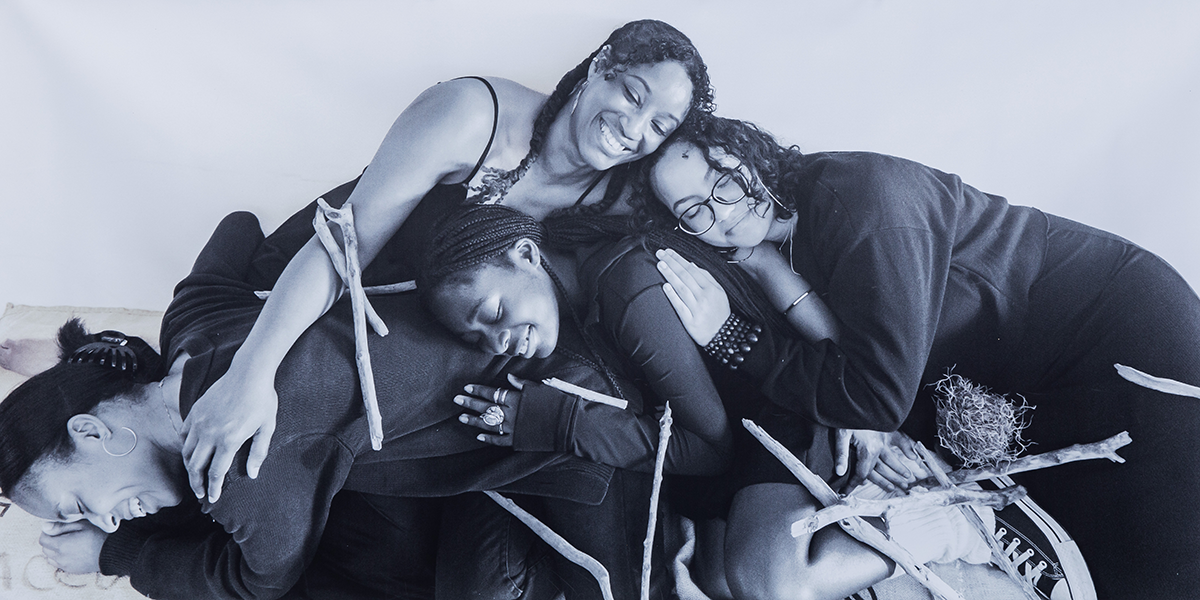
ArtPhilly wanted to share more about the inspiration behind "The Becoming." We asked the legendary Germaine Ingram — lawyer, professor, tap dancer, choreographer, oral historian and Shavon Norris’ collaborator — to write about how this multidisciplinary project draws on a legacy of Black female liberation and solidarity.
The Sisterhood —an intergenerational group of Black women writers, journalists, editors, poets, and literary organizers and scholars that met monthly from 1977 to 1979 in New York City apartments for sociability, mutual support and arts-centered activism — was not in our consciousness when Shavon Norris and I began to imagine The Becoming in the fall and winter of 2024/2025. Shavon and I were focused on envisioning a companion project — a collaborative theater work unveiling the internal lives of a few Black girls and young women — to her penetrating solo piece, The Croning, which examines middle-aged Black women age, weather, and contemplate death.
We were thinking about the welter of conditions that Black girls and young women face today and how a work of devised theater might help our younger sisters mediate those challenges, and lend insight to families, communities, and policy makers about ways to improve education, health, social and work environments for Black girls and young women. We had not given a thought to the network that Sisterhood members Toni Morrison, June Jordan, Toni Cade Bambara, Paule Marshall, Ntozake Shange, Audre Lorde, Alice Walker, Mary Helen Washington, Margo Jefferson, and others built for themselves fifty years ago to support Black women’s literary, promote journalistic and academic careers, confront distorted images of Black women, define what it meant to be Black, woman and feminist, and use literature as a vehicle for Black women’s liberation.
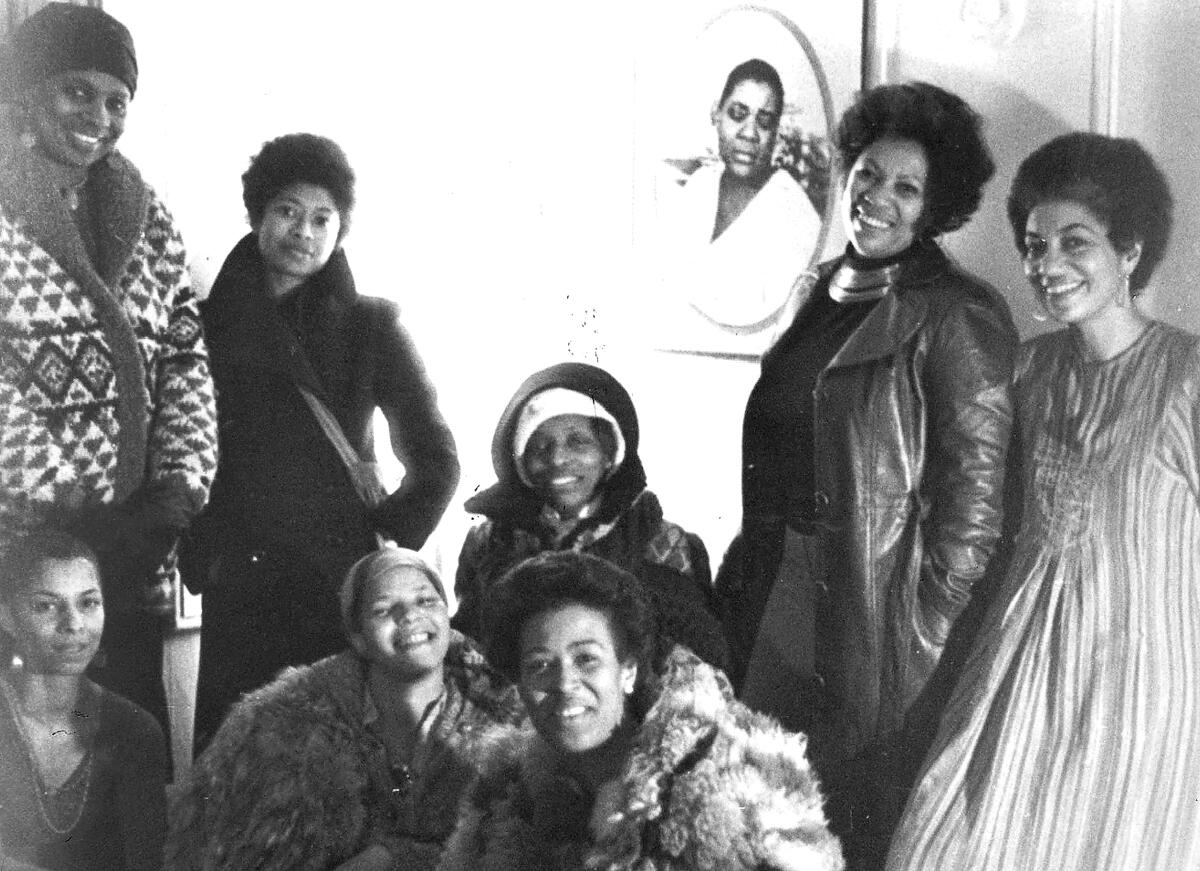
And then I happened upon a photo labeled “The Sisterhood, 1977.” Taken in February of that year, the photo began to circulate publicly in the mid-2000s after it was published in a biography of Alice Walker. It featured eight Sisterhood members at one of their monthly meetings — all facing into the camera, bundled in coats, gathered in front of an oval picture of blues singer Bessie Smith, appearing mournful with eyes down-cast. There’s Alice Walker with head tilted slightly to the left and just a hint of a smile; next to Walker is a double-hooded Lori Sharpe; Toni Morrison standing next to June Jordan, both with looks of warm, relaxed delight; Nana Maynard, seated, wearing a half-smile and watchful eyes; Verta Mae Grosvenor smiling broadly and regally, towering over the others; Ntozake with head thrown back and a wide, voracious grin; and Audreen Ballard, centered in the foreground with a “what you talkin’ bout” expression. It is a portrait of powerful Black women seeming to bask in each other’s brilliant company, and poised to defy the names, images, limitations and expectations that their worlds cast on them. A connection between The Becoming and The Sisterhood began to emerge.
From the start, portraiture has been a key element of The Becoming. The project probes how Black women and girls are seen, and how they want to be seen. It investigates the agency they have and wield to make themselves visible, or not. It examines what it takes for them to counter and complicate the conventional images that conflate the complexities of their backgrounds, experiences, desires and ambitions. Whatever photographer would make portraits of the project cohort — Pippa Keenan, Regina Banks, Nadia Urena, and Danielle Currica — would need to understand instinctively the significance of portraiture to the project, and be able to capture that concept meaningfully in individual and group shots. Shavon found the right artist in Andrea Walls, a Philly-based archivist and multidisciplinary artist who, like members of the Sisterhood, channels the Black Arts Movement’s (circa 1965 to 1976) insistence that the potency of Black art is necessary for Black liberation.
Andrea’s approach to photographing The Becoming cohort reflected the importance of relationship-building in shaping the project. Before the photo shoot, Andrea welcomed Shavon, the cohort and me into a collage-making session in the gallery of Painted Bride Art Center. She opened the session with an invitation for us each to share the history of our name. Then she threw open a trove of photo images, patterned paper, colored tissue, feathers, artificial flowers and leaves, stickers, writing and drawing tools, scissors, glue sticks, and endless tiny doodads from which we each crafted a collage. The process — the choosing and composing, the sharing, the focused silences and explosions of laughter, the observance of and comments on each other’s collage work — was as much a way of bonding the members of the cohort as it was a window for Andrea into the personalities of the group.
On the day of the shoot, Andrea engaged cohort members in gentle banter about their jewelry, outfits, dimples, and hairstyles, and about how their physical features and personalities were similar to their parents’, siblings’, or grandparents’. As she composed each individual photo, members of the cohort offered advice and encouragement to the one in front of the camera. By the time Andrea began to compose group photos, Shavon and the cohort were like puppies piling on one another, sharing their genuine delight in being together, working toward a common goal of revealing some of what it’s like to be in the skin of a Black girl or young woman. Not a hint of awkwardness, reservation or affectation.
The individual and group portraits will be the main visual content of The Becoming gallery exhibition, which will open at Painted Bride Art Center on September 30. The gallery space will be activated by sound scores that hold reflections, stories, rants, remembrances and other evocations from the series of workshops Shavon used to harvest the internal worlds of The Belonging cohort. Audiences will be able to spend time with the photos and recordings (Gallery Hours: 3-7 p.m. September 30-October 1) and also experience performances by the cohort, animating their individual stories and sense of sisterhood forged by the process of being in provocative engagement with each other’s lives and dreams, and Shavon’s methods of communal storytelling. Performances will take place at Painted Bride Project Space, 4029 Cambridge Street, at 7 p.m on Oct. 2 & 3, and 3 p.m. on Oct. 4.
I imagine the spirit of The Sisterhood was guiding us all along, even before we knew it — insisting on a dedicated space for Black women and girls to find uncommon acceptance and understanding, to exercise their agency to be seen as they would choose to be seen, to offer a corrective to the mythologies that weigh on their intentions and ambitions. How sweet to realize that Toni M. and Toni Cade, Ntozake, Alice, June, Audre and the rest were speaking to us from knowing smiles captured in “The Sisterhood, 1977.” Perhaps the portraits from The Becoming will fuel later generations of Black women and girls to depict and speak their truths.
By Germaine Ingram, September 13, 2026